

Pre-foreclosure activity on privately originated loans increased in October 2026, according to the latest Private Lending Market Report from the National Private Lenders Association (NPLA). The report’s market spotlight, provided by SFR Analytics, part of The Mortgage Office, tracks pre-foreclosure rates across the largest U.S. private lending markets. The national rate is up, but distress remains concentrated in specific markets.
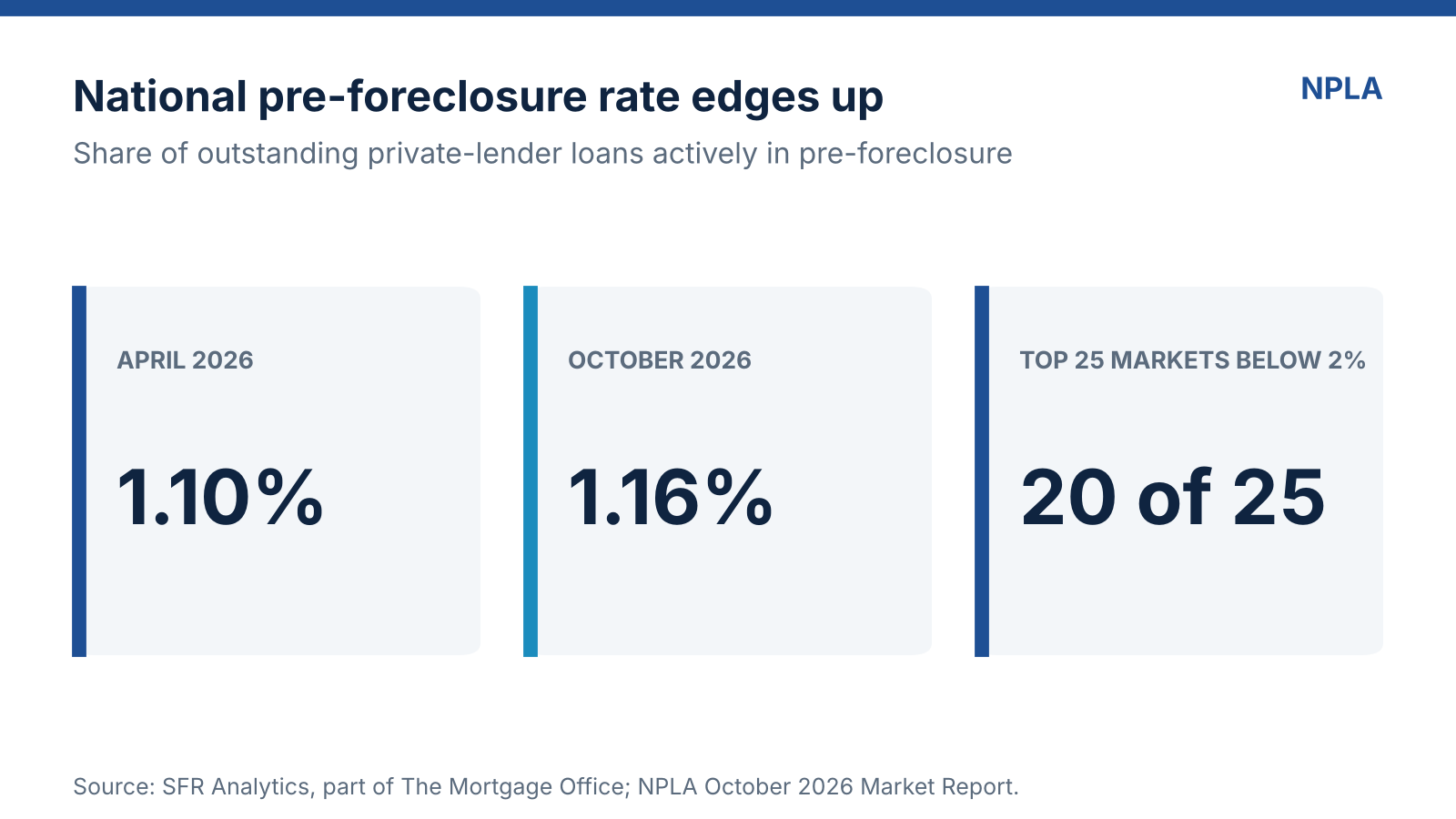
As of October 2026, 1.16% of outstanding loans originated by private lenders were actively in pre-foreclosure, up from 1.10% in April. Most of the largest private lending markets still show limited distress: 20 of the 25 largest markets have pre-foreclosure rates below 2%.
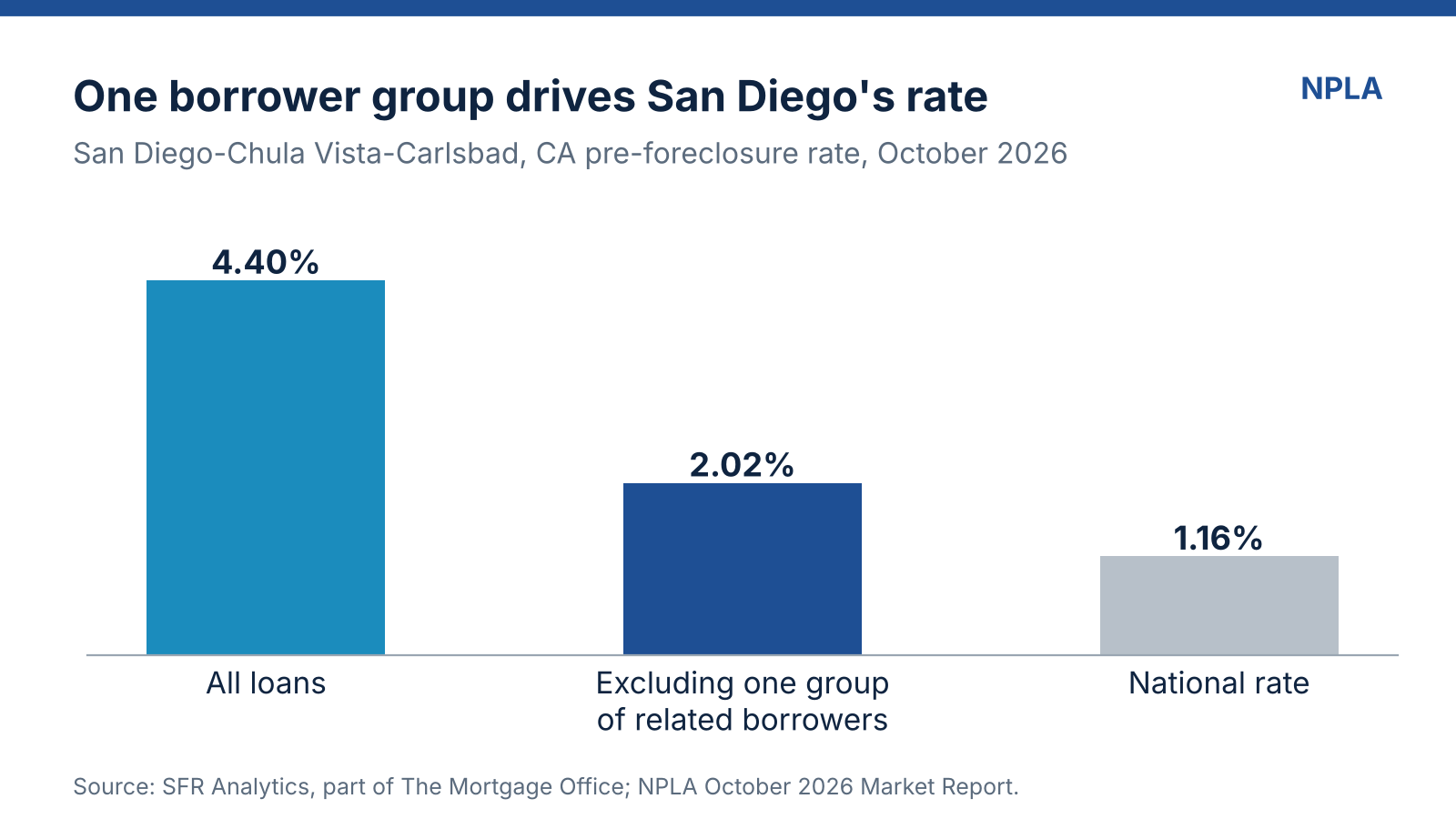
San Diego-Chula Vista-Carlsbad, CA, had the highest pre-foreclosure rate among the 200 largest private lending markets at 4.40%. Most of that activity comes from one group of related borrowers. Excluding them, San Diego’s rate falls to 2.02%. That gap shows how a single borrower group can skew a market-level number.
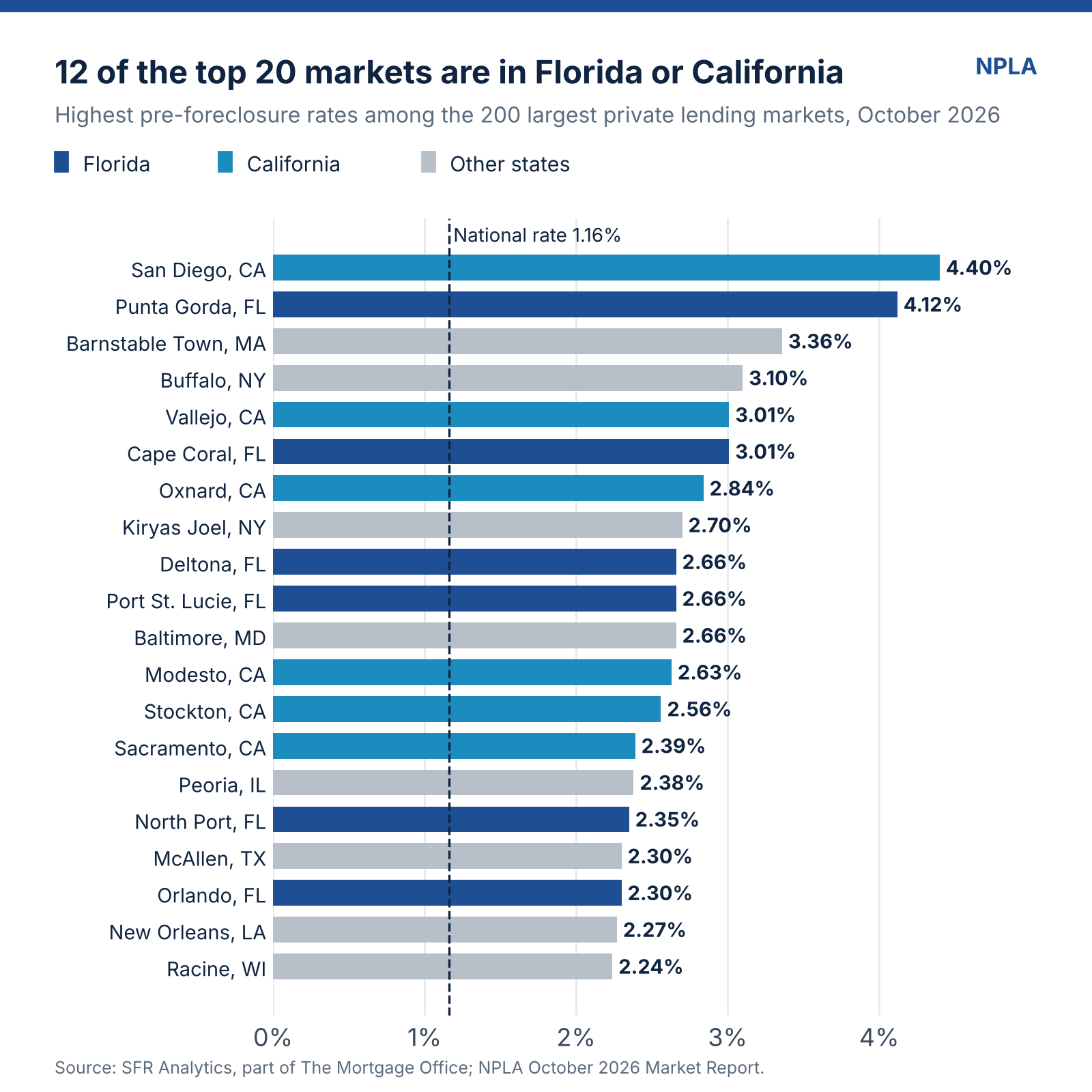
Other markets with elevated rates included Punta Gorda, FL (4.12%), Barnstable Town, MA (3.36%), and Buffalo, NY (3.10%).
Florida accounted for four of the 10 markets with the highest pre-foreclosure rates in October, down from seven in April: Punta Gorda (4.12%), Cape Coral (3.01%), Deltona (2.66%) and Port St. Lucie (2.66%). California accounted for three: San Diego (4.40%), Vallejo (3.01%) and Oxnard (2.84%). Of the top 20 markets, 12 were in Florida or California.
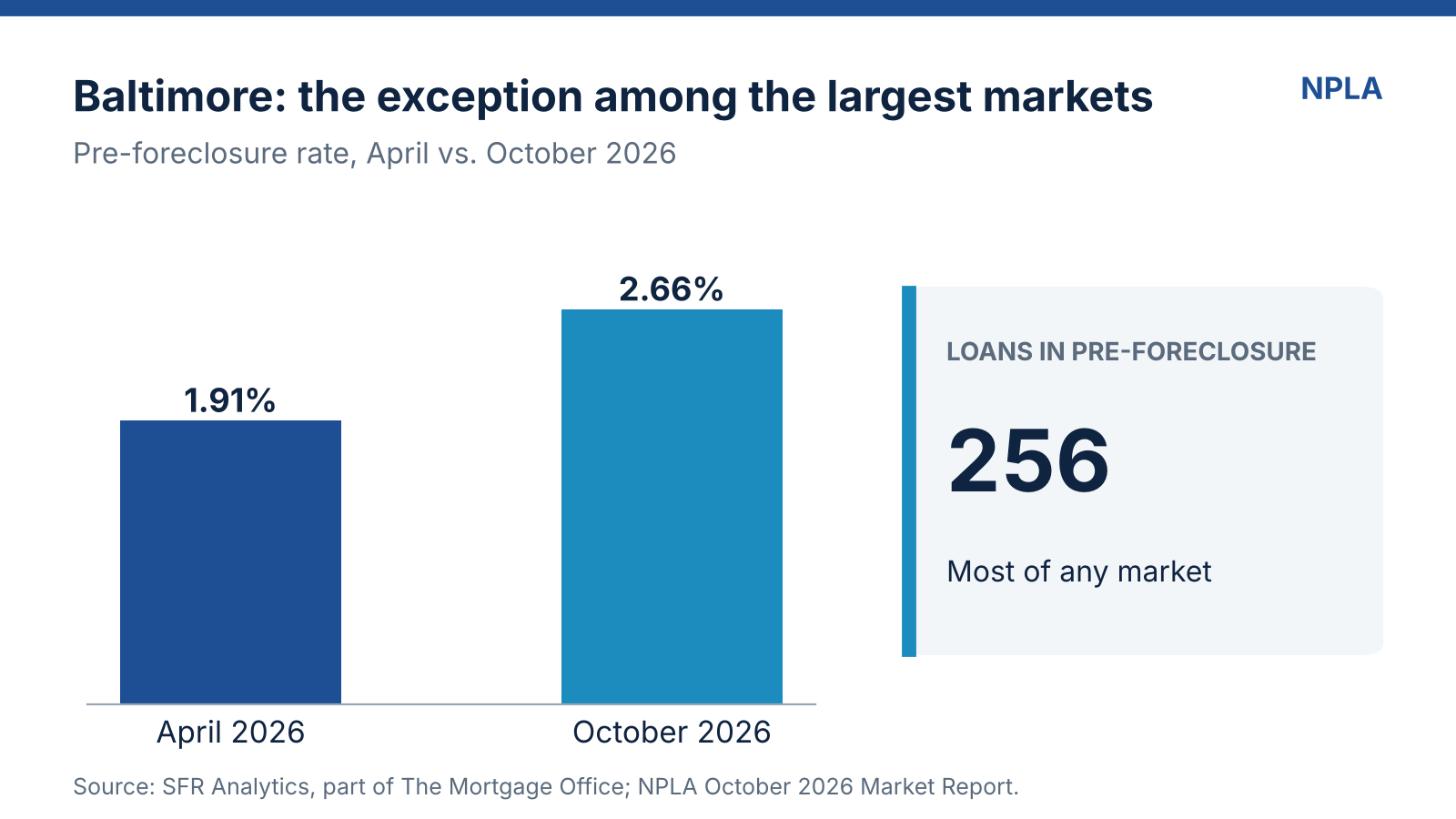
Baltimore is the exception among the 25 largest private lending markets. Its pre-foreclosure rate rose from 1.91% in April to 2.66% in October, and its 256 loans in pre-foreclosure are the most of any market. Other markets have higher rates, but Baltimore has the most affected loans. That’s why lenders should track loan counts as well as rates.
At 1.16%, the national rate does not point to widespread distress. The increase is concentrated in Florida, California, and a handful of other markets, including Baltimore. For lenders, regional exposure and borrower concentration matter as much as the national number.
To learn more about the NPLA, contact Amy Kame at [email protected].